
An association relies heavily on partners for venues, technology and logistics. Choosing the right partner is not just an operational decision, it directly impacts member experience, event reputation and financial outcomes. For teams managing large budgets or high-visibility programs, vendor selection can carry real risk.
If you are like many association teams, you may not have a structured process for sourcing these partnerships, which can lead to inconsistent results or missed opportunities. Thankfully, selecting the right partner begins with a strong event management RFP, a process you can use to build clarity, consistency and accountability across your event planning. The following article walks you through how to build this RFP for your next proposal while providing usable templates your team can apply immediately.
What is an Event Management RFP?
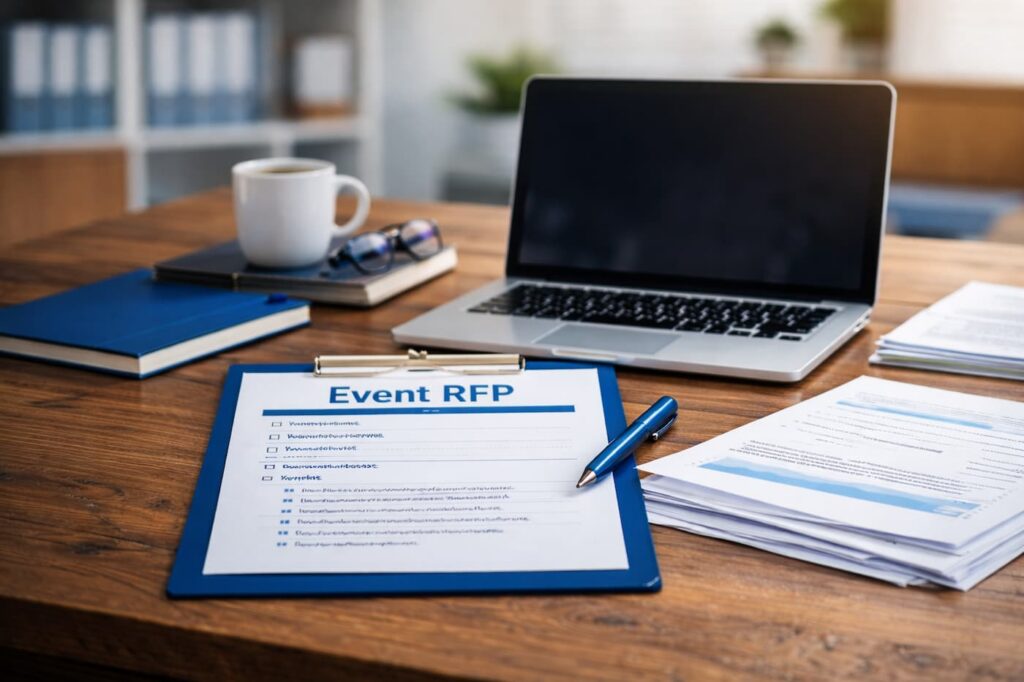
An Event Management RFP stands for Request for Proposal. This formal written document is used by your association to solicit detailed bids from planners, vendors, venues or service providers connected to an upcoming event. A well-developed event management RFP outlines your event goals, budget expectations, logistical requirements and scope so potential partners can provide accurate and comparable responses.
This process allows associations to evaluate capabilities, experience and pricing with transparency while setting expectations from the start. Rather than relying on informal conversations or scattered proposals, a structured RFP gives your organization a consistent framework for decision-making and partner alignment.
Why Associations Use Event Management RFPs
Associations use an event management RFP to standardize vendor evaluation, clarify expectations early and support board transparency throughout the selection process. Establishing structure improves internal confidence while ensuring that proposals can be reviewed objectively and fairly. In practical terms, it helps teams compare apples to apples rather than apples to oranges because each vendor is responding to the same information set.
Using an RFP also strengthens internal alignment. Staff, volunteers and leadership gain shared visibility into requirements, evaluation factors and decision timelines. This level of clarity reduces last-minute confusion and supports stronger vendor relationships built on mutual understanding of expectations.
When You Should Issue an Event Management RFP
There are several situations where issuing an Event Management RFP is particularly beneficial, including:
- Large annual meetings
- Technology sourcing
- Venue selection
- Multi-year vendor contracts
While other scenarios may also benefit from this process, these examples highlight when structured partner evaluation is most valuable. Anytime financial exposure, attendee experience or operational complexity increases, a formal RFP approach becomes worth the investment.
Key Elements of a Strong Event Management RFP
Although your association will tailor each event management RFP to its purpose, strong proposals typically include the following components.
Organizational Overview
Each RFP should introduce your association by outlining mission, member base, event goals and event context. Providing this background helps vendors understand your audience and align their proposal appropriately.
Event Scope and Requirements
Logistical considerations such as event dates, location, expected attendance, required services and technology needs must be clearly defined. Specificity here reduces misunderstandings later and leads to more relevant proposals.
Budget Guidance
Even if exact figures are unavailable, providing budget ranges or spending priorities helps vendors tailor realistic responses. This may include anticipated allocation across catering, venue, marketing, production or technology support.
Vendor Evaluation Criteria
Request details related to experience, references, innovation capabilities and reporting practices. Identifying these factors upfront ensures proposals address the metrics your association values most.
Timeline and Submission Instructions
A strong RFP specifies deadlines, submission format expectations and contract process milestones. Clear instructions keep responses consistent and reduce administrative follow-up later.
How to Write an Event Management RFP Step-by-Step
Now that we have reviewed the structure, here is a practical process for organizing an effective event management RFP.
Step 1 – Define Event Goals
Clarify revenue targets, educational outcomes and engagement objectives. Establishing measurable outcomes ensures vendor alignment and creates benchmarks for post-event evaluation.
Step 2 – Identify Stakeholders
Map out internal teams, volunteer leadership, sponsors and external collaborators. Recognizing stakeholder influence early helps capture complete requirements before distribution.
Step 3 – Draft Clear Requirements
Avoid vague language by specifying deliverables and expectations. Detail service scope, communication expectations and reporting needs so vendors can respond precisely.
Step 4 – Distribute Strategically
Rather than broad distribution, share your RFP with qualified vendors aligned to your event type. Targeted outreach improves proposal quality and reduces evaluation workload.
Step 5 – Score Responses Consistently
Use an evaluation matrix to measure proposals against defined criteria. Documenting scoring protects objectivity and supports transparent decision justification.
Event RFP Template Examples
Below are practical template structures your association can adapt when building its own event RFP template.
Simple Event RFP Template
- Organization overview
- Event summary and goals
- Required services
- Timeline and scheduling
- Submission details and format expectations
This format works well for straightforward sourcing needs or smaller programs.
Detailed Event RFP Template
- Strategic objectives and revenue targets
- Audience demographics
- Technology expectations
- Data and reporting requirements
- Accessibility standards
- Sustainability goals
This approach supports complex initiatives where vendor capabilities must be evaluated more deeply.
Technology-Focused Event RFP Template
- Platform integration requirements
- Registration workflow expectations
- Mobile experience considerations
- Analytics and ROI tracking requirements
Associations seeking advanced event technology partnerships often benefit from this structured approach.
Common Mistakes Associations Make When Creating RFPs
Even experienced teams encounter challenges when developing RFPs. Avoid these common issues:
- Providing vague event scope
- Setting unrealistic timelines
- Missing evaluation criteria
- Including irrelevant information
- Overlooking post-event reporting expectations
Recognizing these pitfalls early improves proposal quality and reduces vendor confusion.
Making Your Event Management RFP More Effective
To enhance results, incorporate these best practices when building your event management RFP:
- Use clear formatting
- Include measurable goals
- Encourage vendor questions
- Provide decision transparency
- Focus on outcomes rather than logistics alone
These adjustments improve collaboration and lead to more thoughtful proposals.

Let Us Help You
At MemberClicks, we understand that developing an effective event management RFP is about more than paperwork. It supports better partner alignment, stronger event execution and improved long-term planning. The templates and structure outlined above help associations scale programs confidently while identifying partners suited to their mission and audience needs.
If your organization is looking to strengthen vendor coordination, event registration and reporting workflows, exploring how association technology supports event operations is a valuable next step. Discover how the right tools can streamline planning and enhance member experiences while supporting data-driven event strategy.















 Need Help?