
Strategic planning for associations often starts with good intentions but doesn’t always translate into action. Plans get created, shared, and then slowly fall out of focus as teams shift back to day-to-day priorities.
For trade and professional associations, the challenge is even more complex. You’re balancing board direction, member expectations, and limited resources while trying to move the organization forward.
This guide breaks down a clear, practical approach to strategic planning for associations so you can align your team, prioritize what matters most, and turn your plan into measurable progress.
What Is Strategic Planning for Associations?
Strategic planning for associations is the process of aligning your organization’s goals, priorities, and resources to guide long-term growth and decision-making.
Unlike corporate planning, association strategic planning must account for member needs, board leadership, and evolving priorities. A strong plan creates clarity around what the organization is working toward and how success will be measured.
Why Strategic Planning Matters for Associations
A well-defined strategic plan helps associations move forward with purpose instead of reacting to challenges as they arise.
When done effectively, strategic planning helps you:
- Connect initiatives to measurable outcomes
- Strengthen member engagement through more targeted efforts
- Build more reliable revenue streams, including both dues and non-dues sources
- Align board members, staff, and stakeholders around shared priorities
Why Strategic Plans Often Fall Short
Goals That Are Too Broad
Vague goals make it difficult to measure progress or guide decision-making. Without clear direction, teams can lose focus quickly.
Lack of Member Data or Input
Plans built without real data or member feedback often miss the mark. Understanding your audience is key to setting priorities that drive engagement and growth.
No Clear Ownership or Accountability
When responsibilities aren’t defined, initiatives stall. Clear ownership ensures progress and accountability across teams.
Plans That Aren’t Revisited
Strategic plans should evolve over time. Without regular check-ins, it’s easy for priorities to drift and lose alignment with your original goals.
A 6-Step Strategic Planning Framework for Associations
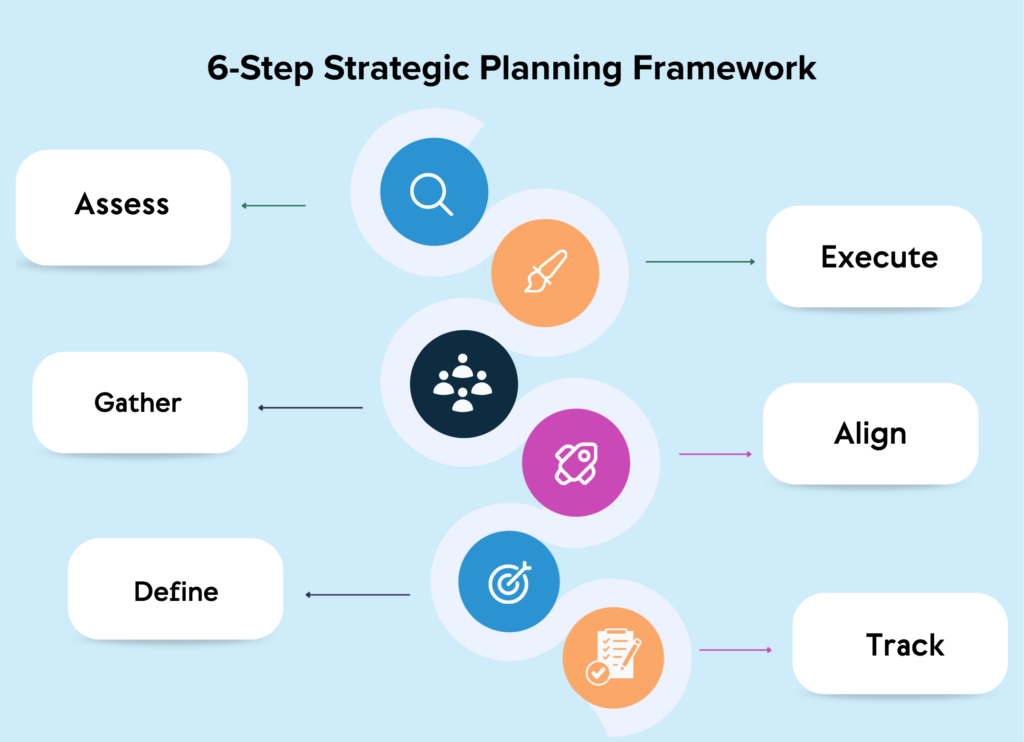
Assess Your Current State
Start with a clear understanding of where your association stands today. Focus on:
- Membership trends, including growth and renewals
- Engagement levels and what drives participation
- Revenue performance across dues and non-dues sources
- Program performance and participation
Using tools that help you track and analyze member data can make this process more accurate and actionable.
Gather Input From Stakeholders
A strong plan reflects multiple perspectives. Gather input from:
- Board members
- Staff
- Members
- Partners or sponsors
This ensures your strategy aligns with both leadership priorities and member expectations.
Define Strategic Priorities
Identify 3–5 key focus areas that will guide your organization forward. Keeping priorities limited helps maintain clarity and focus across your team.
Common priorities include member growth, engagement, revenue diversification, and program expansion.
Turn Priorities Into Actionable Initiatives
Translate each priority into clear initiatives with defined outcomes.
Each initiative should include:
- A specific goal
- A designated owner
- A realistic timeline
This structure makes it easier to track progress and maintain accountability.
Align Your Technology and Tools
Your systems should support your strategy, not slow it down.
Using a centralized platform like an association management software helps you manage member data, track performance, and execute initiatives more efficiently. If you’re exploring how these systems work, understanding what an AMS is can help you evaluate your current setup.
Track Progress and Adjust
Consistent tracking keeps your plan relevant and actionable.
Use KPIs tied to your priorities, schedule regular check-ins, and adjust your approach as needed. This ensures your strategy stays aligned with your goals throughout the year.
What to Include in an Association Strategic Plan
Mission and Vision Alignment
Your strategic plan should reflect your organization’s core purpose and long-term direction.
Strategic Priorities
Clearly define the areas your association will focus on over the planning period.
Key Initiatives and Projects
Outline the actions that will drive each priority forward.
KPIs and Success Metrics
Establish how progress will be measured so your team can track results.
Timeline and Ownership
Assign responsibility and set expectations for execution to keep initiatives moving.
Strategic Planning Examples for Associations

Increasing Member Engagement
To improve engagement, associations might focus on:
- Creating more personalized member experiences through segmentation
- Strengthening onboarding to improve early engagement
- Developing content that reflects member interests
Growing Non-Dues Revenue
To diversify revenue, associations might introduce:
- Events that attract both members and non-members
- Sponsorship opportunities that build partnerships
- Educational programs aligned with member needs
Tips for Making Your Strategic Plan Actually Work
Keep It Focused and Realistic
A clear, manageable plan is easier to execute and maintain.
Assign Clear Ownership
Define who is responsible for each initiative to keep progress on track.
Use Data to Guide Decisions
Data-driven planning leads to more informed and effective strategies.
Communicate Progress Regularly
Ongoing communication helps teams stay aligned and engaged.
Revisit and Update the Plan
Regular updates ensure your strategy continues to reflect your goals and priorities.
How Technology Supports Strategic Planning
Technology plays a critical role in turning strategy into action.
With the right tools, associations can:
- Gain visibility into performance through real-time data
- Track progress against strategic goals
- Automate communication and workflows
- Better understand member behavior and engagement
These capabilities make it easier to execute your plan consistently and adjust as needed.

Next Steps
Getting started with strategic planning doesn’t require a perfect process. Start with a clear framework, involve your stakeholders, and focus on execution.
A well-structured plan will help your association stay aligned, prioritize effectively, and make steady progress toward your goals.















 Need Help?