What Does Your Association Need in an AMS?
Finding The Right AMS: Identify Your Association’s Needs For The Best Fit
When selecting an Association Management Software (AMS), understanding the unique needs of your association is essential. A well-defined needs assessment ensures that you choose an AMS that aligns with your organization’s strategic goals and aligns with operational requirements. Skipping this assessment can result in choosing a system that doesn’t fully meet your needs or is difficult to implement effectively.
Aligning Your AMS with Your Association’s Strategic Goals
Your AMS should do more than just manage data—it should actively support your organization’s long-term goals. By aligning AMS capabilities with your strategic objectives, you ensure that the system enhances efficiency, fosters growth and delivers value to both your team and your members. Before selecting an AMS, take a step back and analyze how it can contribute to your broader mission.
Aligning AMS capabilities with these goals creates a clear roadmap for its role in your organization.
Compare AMS solutions that align with your needs.








How to Conduct a Needs Assessment to Find the Right AMS
Selecting the right AMS starts with a clear understanding of your association’s unique needs. A thorough needs assessment helps you identify the essential features and functionalities that will best support your operations, members and long-term goals. Without this step, you risk choosing a system that lacks critical capabilities, creating inefficiencies and frustration down the line.
A well-structured needs assessment allows you to:
- Clarify Organizational Priorities – Define the key challenges your AMS should address and how it will support your strategic objectives.
- Identify Pain Points – Recognize current inefficiencies in membership management, event planning, communication or financial tracking.
- Engage Key Stakeholders – Gather input from staff, board members and members to ensure the AMS meets everyone’s needs.
- Define Must-Have vs. Nice-to-Have Features – Distinguish between essential functionalities and optional enhancements to guide vendor selection.
- Ensure Long-Term Scalability – Choose an AMS that can grow with your association and adapt to evolving needs.
Let’s go through each one of these steps.

Clarify Organizational Priorities
Start by defining your association’s key priorities and goals. Consider what you want to achieve with your AMS, such as improving operational efficiency, enhancing member engagement or generating non-dues revenue.
How to Clarify Priorities:
- Set Measurable Outcomes: Define specific, measurable outcomes you want to achieve, such as a percentage increase in member retention or improved event attendance rates.
- Review Strategic Plans: Examine your association’s current strategic plan to identify major objectives that an AMS should support.
- Conduct Leadership Meetings: Meet with your leadership team to discuss how an AMS can align with and drive strategic goals.
Identify Pain Points
Pinpoint the areas where your current processes are inefficient or where members experience frustration. This helps you prioritize AMS functionalities that can solve existing problems.
How to Identify Pain Points:
- Look at Past Data: Review past performance metrics and data to spot trends in low engagement, declining retention or operational inefficiencies.
- Analyze Current Workflows: Map out current workflows in areas like membership management, event planning and financial tracking to identify bottlenecks or redundancies.
- Collect Feedback: Gather feedback from staff and members on what tasks are difficult, time-consuming or prone to errors.
Engage Key Stakeholders
Involving key stakeholders in the needs assessment process ensures buy-in and produces a comprehensive understanding of your association’s needs.
How to Engage Stakeholders:
- Prioritize Input: Analyze stakeholder feedback to clearly document needs and prioritize them based on their impact on organizational goals.
- Identify Key Stakeholders: Determine who should be involved, such as staff members, board members and active association members.
- Use Multiple Feedback Methods: Use surveys, focus groups or one-on-one interviews to gather input from stakeholders.
Define Must-Have vs. Nice-to-Have Features
Distinguishing between essential and optional AMS features helps you stay focused on what’s truly important and prevents you from getting distracted by unnecessary functionality.
How to Define Essential Features:
- Create Evaluation Matrix: Develop a matrix categorizing features as “must-have” or “nice-to-have” to help guide vendor evaluations.
- List Core Functions: List out the core functions your association must have, such as membership management, event registration and reporting.
- Rank Features by Priority: Rank each feature by primary and secondary impact on your association’s goals.
Ensure Long-Term Scalability
Choosing an AMS that can adapt to future growth and evolving needs is crucial for long-term success.
How to Ensure Scalability:
- Plan for Customization: Ensure the AMS allows for customization to meet your association’s evolving requirements.
- Project Future Needs: Consider how your association might grow in terms of membership, events and services in the next 3-5 years.
- Evaluate Vendor Capabilities: Assess whether potential AMS providers offer solutions that can handle increased workloads, new features or additional integrations.
Building the Ultimate AMS Needs Checklist
A structured checklist ensures you don’t overlook any critical features when evaluating AMS options. By clearly defining your association’s must-have functionalities, integrations and support requirements, you create a roadmap for selecting the best solution.
A well-prepared checklist helps you compare vendors more effectively, streamline decision-making and ensure that your chosen AMS fully meets your operational and strategic needs.
What Does Your Association Need?
- Membership Management: Membership database, dues processing, member portals and automated renewals.
- Event Management: Registration, payment processing, attendee tracking and on-site capabilities.
- Communication Tools:Email marketing, newsletters, social media integration and personalized communication.
- Learning Management System (LMS): Online course management, certification tracking and member progress reporting.
- Forums and Community Building: Member forums, discussion boards, networking tools and group management.
- Financial Management: Accounting integration, invoicing, donation tracking and financial reporting.
- Reporting and Analytics: Customizable dashboards, membership trends and performance analytics.
- Website & CMS Integration: Website builder, member-only content, SEO tools, event calendar and third-party platform integration.
- Mobile Accessibility & Apps: Branded mobile apps, member-only push notifications, mobile event check-in and online payments.
- E-commerce & Merchandise Sales: Online store, product catalog, discount codes, secure checkout and shipping tracking.
- AI & Automation Features: Automated workflows, predictive analytics, AI-driven content recommendations, chatbots and automated surveys.
Desired Integrations:
Choosing an AMS that integrates smoothly with your existing systems ensures streamlined operations, reduces manual work and improves data accuracy. The right integrations allow your association to maintain a connected ecosystem where critical tools work together seamlessly, eliminating silos and enhancing efficiency.
What to Look for in AMS Integrations:
- API Compatibility: Ensure the AMS has an open API for smooth data exchanges between platforms.
- Real-Time Syncing: Avoid data discrepancies with automatic updates across integrated tools.
- Ease of Setup: Look for integrations that require minimal technical expertise to configure.
- Data Security & Compliance: Ensure integrations comply with data protection regulations like GDPR and CCPA.
Ensuring Success: Understanding AMS Support and Training Needs
Implementing a new AMS is a significant investment, and the level of support and training available can make or break your association’s success with the system. A well-supported AMS ensures a smooth transition for your team, minimizes downtime and maximizes the system’s effectiveness. Understanding what kind of assistance your association will need—both during implementation and beyond—helps you choose a provider that aligns with your long-term success.
Support and training requirements vary based on your internal resources, technical expertise and the complexity of the AMS. Some associations may need hands-on guidance, while others can manage with self-service resources. Evaluating these needs upfront ensures your team can fully leverage the AMS from day one.
Key areas to consider when evaluating AMS support and training:
- Initial Implementation Support: Assistance with data migration, system configuration and setup to ensure a smooth launch.
- Ongoing Technical Support: Availability of help desk services, troubleshooting assistance and system updates to address technical issues.
- Training and Onboarding: Resources like live training sessions, user guides, video tutorials and ongoing education to help staff and members effectively use the system.
- Customization Assistance: Support for configuring workflows, automating tasks and tailoring features to meet your association’s needs.
- Community and Peer Support: Access to user communities, online forums or dedicated account managers for additional insights and best practices.
Breakdown of Key AMS Features
Selecting the right AMS isn’t just about checking off a list of features—it’s about understanding how each functionality supports your association’s operations, enhances member experiences and drives long-term growth. A well-designed AMS should streamline tasks, improve engagement and provide valuable insights that help your organization thrive.
This section breaks down essential AMS features in greater detail, explaining how they contribute to efficiency, communication, financial management and overall member satisfaction. By understanding these core capabilities, you’ll be better equipped to evaluate AMS options and choose the system that best aligns with your association’s goals.
Membership Management: The Core of Your AMS
Effective membership management is at the heart of any association, and your AMS should provide the tools needed to simplify administrative tasks, enhance member engagement and improve retention. A strong membership management system automates routine processes, reduces manual effort and ensures that both staff and members have easy access to critical information.
Key Features of Membership Management:
- Member Engagement Tracking – Gain insights into how members interact with your association by tracking event participation, course enrollments, discussion forum activity and email engagement. This data helps you identify highly engaged members and those at risk of lapsing.
- Member Database with Customizable Fields – A centralized database should store all member information, including contact details, membership status, participation history and engagement levels. Customizable fields allow you to track specific data relevant to your association’s needs.
- Automated Dues Processing and Renewals – Your AMS should handle membership billing with automated invoicing, renewal reminders and recurring payment options. This reduces administrative workload and prevents lapses in membership.
- Self-Service Member Portals – Empower members to update their profiles, renew memberships, register for events and access exclusive resources through a user-friendly online portal. This enhances the member experience while reducing staff intervention.
- Membership Tier and Group Management – If your association offers different membership levels, the AMS should allow for tiered pricing, benefits allocation and group-based permissions. This ensures that each member gets access to the appropriate content and services.
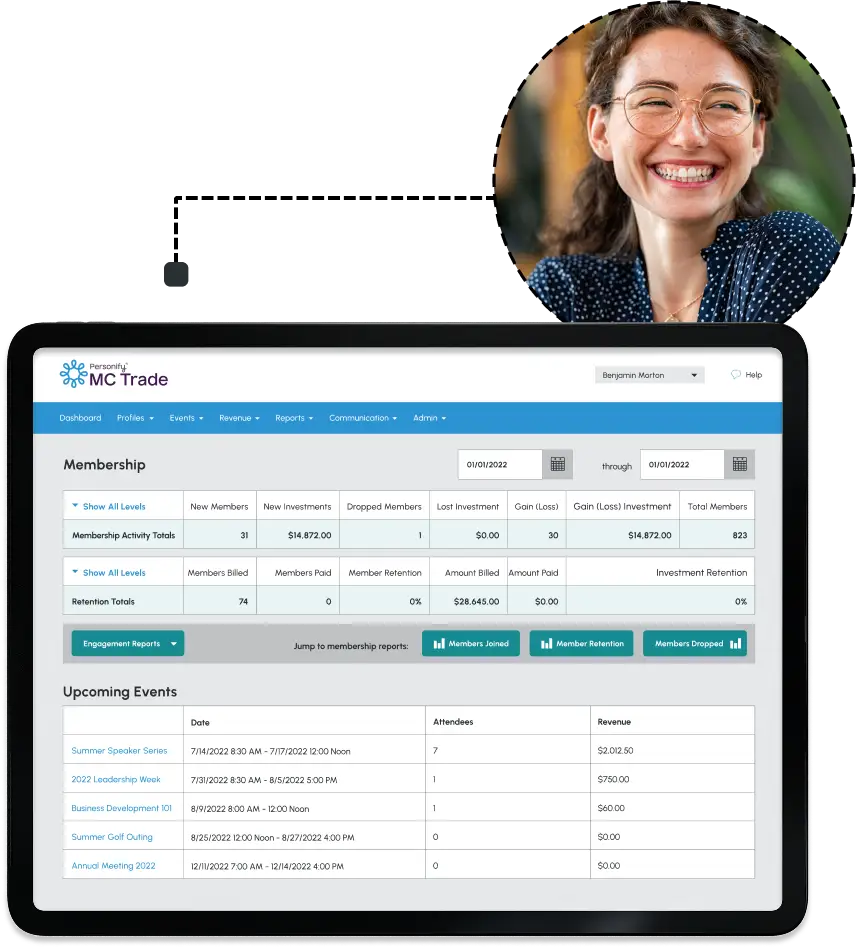
Event Management: Streamlining Planning and Engagement
AMS platforms can greatly enhance event planning and management. Your events play a crucial role in driving member engagement, generating revenue and fostering professional development within your association. A robust AMS should simplify every aspect of event management, from planning and registration to attendee tracking and post-event analysis. With the right tools in place, your team can save time, reduce manual tasks and create a seamless event experience for participants.

Key Features of Event Management:
- Online Event Registration and Ticketing – Offer a user-friendly registration process with customizable ticketing options, discount codes and automated confirmation emails. Members should be able to sign up easily for in-person, virtual or hybrid events.
- Payment Processing for Event Fees – Ensure secure payment collection with built-in payment gateways that accept credit cards, ACH transfers and other payment methods. The system should also support automated invoicing and refunds if needed.
- Attendee Tracking and Check-In Tools – Track registrations in real time and simplify on-site or virtual check-ins with QR code scanning, digital badges or NFC technology. This improves efficiency and enhances the attendee experience.
- Virtual and Hybrid Event Capabilities – Support live-streaming, webinar integration, breakout sessions and on-demand content for attendees who cannot join in person. A strong AMS should integrate with platforms like Zoom, GoToWebinar or Microsoft Teams.
- Multi-Session and Multi-Day Scheduling – Manage complex event schedules with customizable session tracks, speaker management tools and automated agenda builders to help attendees plan their experience.
- Sponsorship and Exhibitor Management – Provide tools to manage event sponsors, track exhibitor participation and offer digital and in-person sponsorship opportunities.
- Post-Event Reporting and Feedback Collection – Gather valuable insights through attendee surveys, session feedback and event performance analytics to improve future events and measure success.

Financial Management: Simplifying Payments and Revenue Tracking
Managing your association’s finances efficiently is critical for sustainability and growth. Your AMS should provide robust financial management tools that streamline dues collection, event payments, donation tracking and financial reporting. By automating these processes, you can reduce administrative burden, improve accuracy and ensure financial transparency across your organization.
Key Features of Financial Management:
- Integrated Accounting and Invoicing – Sync financial transactions with accounting software like QuickBooks or Xero to maintain accurate records. Generate automated invoices for membership dues, event registrations and other payments.
- Online Payment Processing – Offer secure, convenient payment options, including credit cards, ACH transfers, PayPal and digital wallets. Automated payment reminders help reduce missed payments and improve cash flow.
- Automated Dues Collection – Enable auto-renewals and recurring billing for memberships, reducing manual follow-ups and ensuring a steady revenue stream. Members should be able to manage their payment preferences through self-service portals.
- Donation and Sponsorship Tracking – Track incoming donations, sponsorship contributions and fundraising campaigns in real time. Generate detailed reports to analyze revenue sources and donor trends.
- Budgeting and Expense Management – Monitor expenses related to events, marketing, staff salaries and operational costs. Compare projected vs. actual expenses to maintain financial stability.
- Financial Reporting and Forecasting – Access real-time financial reports, including revenue breakdowns, outstanding payments and cash flow projections. Customizable dashboards provide insights for informed decision-making.
- Tax Compliance and Audit Readiness – Ensure compliance with financial regulations by generating audit-friendly reports and tax documentation. Your AMS should support tax-exempt statuses and regional tax requirements.
Communication and Marketing Tools:
Strengthening Member Engagement
Effective communication is the foundation of a thriving association. Your AMS should provide built-in communication tools to streamline outreach, personalize messaging and keep members informed and engaged. Whether through email campaigns, social media or targeted notifications, strong communication features help associations build lasting relationships with members and prospects.
Key Features of Communication and Marketing Tools:
- Email Marketing and Automated Campaigns – Create and schedule targeted email campaigns with customizable templates, automated follow-ups and performance tracking. Segmented lists allow you to personalize outreach based on member behavior, event participation or renewal status.
- Newsletters and Announcements – Easily send newsletters, updates and important announcements to keep members informed about upcoming events, industry news and association initiatives.
- Social Media Integration – Connect your AMS with platforms like LinkedIn, Facebook and Twitter to streamline content sharing and boost member engagement across social channels.
- Personalized Member Communications – Use data-driven insights to deliver relevant messages, such as renewal reminders, event invitations and content recommendations tailored to individual interests.
- SMS and Push Notification Capabilities – Reach members instantly with text messages or mobile app notifications for urgent updates, reminders or special announcements.
- Survey and Feedback Collection – Gather valuable insights from members through built-in survey tools that help improve events, programs and overall engagement strategies.
- Marketing Automation and Drip Campaigns – Automate member outreach with scheduled drip campaigns that nurture engagement over time, such as onboarding sequences for new members or reminders for lapsed memberships.
- Landing Pages and Forms – Design customizable landing pages and registration forms to drive conversions for events, membership sign-ups and fundraising campaigns.
- Tracking and Analytics – Monitor open rates, click-through rates and engagement metrics to optimize communication strategies and improve outreach effectiveness.
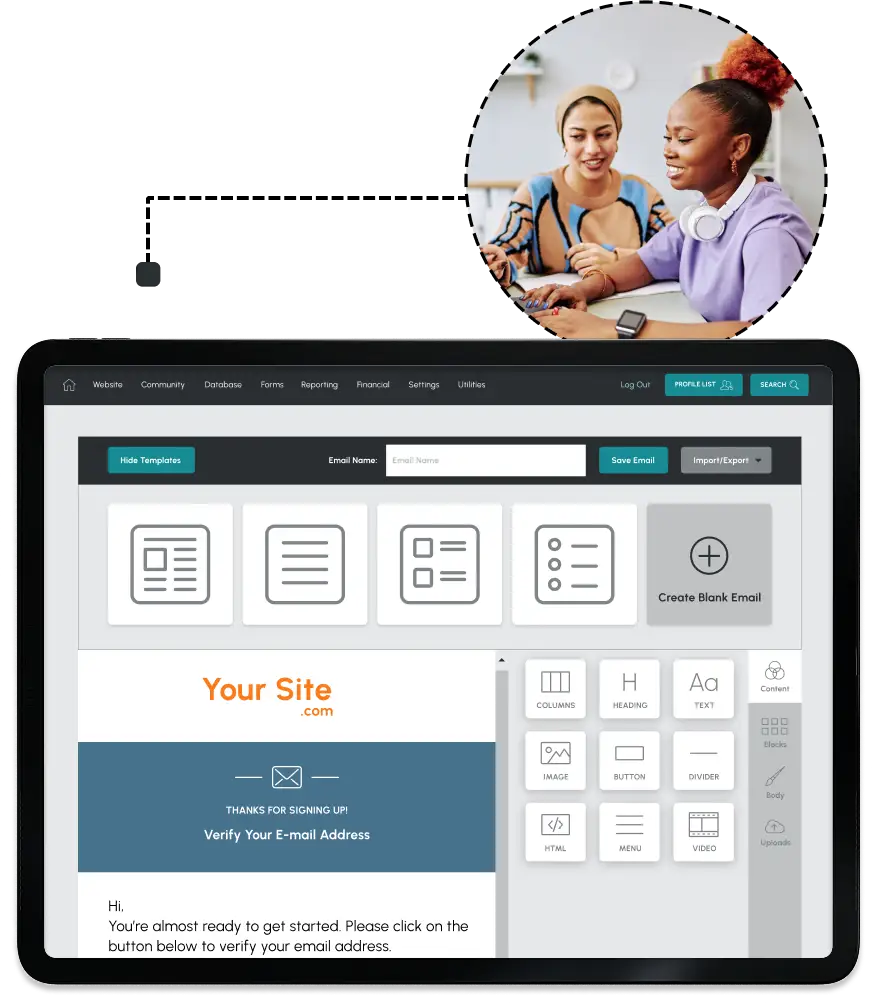

Reporting and Analytics: Data-Driven Insights for Smarter Decision-Making
Your AMS should do more than just store data—it should provide actionable insights that help your association make informed decisions. Strong reporting and analytics capabilities allow you to track membership trends, measure event success, analyze financial performance and optimize engagement strategies. With real-time access to key metrics, your team can proactively identify opportunities and challenges, ensuring your association stays on the path to growth.
Key Features of Reporting and Analytics:
- Customizable Dashboards – Create real-time, user-friendly dashboards that display key performance indicators (KPIs) such as membership growth, retention rates and event participation.
- Membership Trends and Retention Analysis – Track new sign-ups, renewal rates and lapsing members to identify patterns and refine your retention strategies.
- Event Performance and Engagement Metrics – Measure event registration numbers, attendance rates, session popularity and attendee engagement to improve future event planning.
- Financial Reporting and Forecasting – Generate detailed financial reports that track revenue from dues, events, sponsorships and donations, helping you forecast future growth.
- Engagement Scoring and Member Activity Tracking – Use data-driven insights to identify highly engaged members, track interactions and predict which members may need additional outreach to maintain involvement.
- Automated Reports and Scheduled Insights – Set up automated reports that are delivered to key stakeholders on a regular basis, ensuring leadership has the latest data to guide decision-making.
- Survey and Feedback Analysis – Collect and analyze feedback from members, event attendees and volunteers to identify areas for improvement and measure satisfaction.
- Benchmarking and Comparative Analysis – Compare your association’s performance against industry benchmarks or past performance to measure progress and identify growth opportunities.
- Data Export and API Access – Ensure seamless data sharing with other systems through easy export options and API integrations, allowing for deeper analysis using external tools.
Learning Management System (LMS):
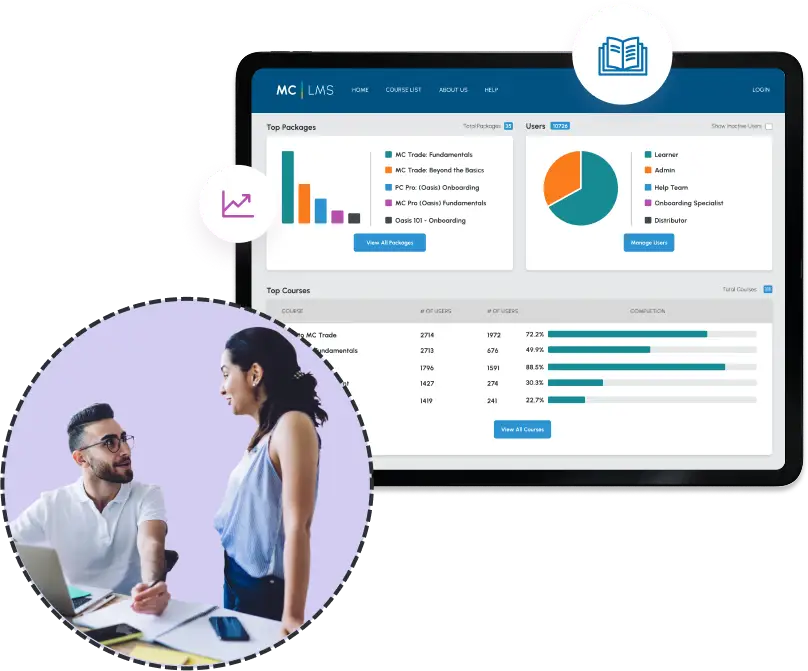
Providing educational opportunities is a key way associations add value to their members. An integrated Learning Management System (LMS) within your AMS allows you to offer online courses, certifications and professional development programs, making it easier for members to expand their knowledge and stay engaged. A well-designed LMS helps streamline course management, track member progress and ensure compliance with industry standards or continuing education requirements.

Key Features of an Integrated LMS:
- Online Course Catalog and Enrollment – Offer a centralized hub where members can browse, enroll in and access a variety of online courses, webinars and certification programs.
- Certification and Credential Tracking – Automate the process of issuing and tracking certifications, continuing education credits (CEUs) and professional development milestones.
- Member Progress Reporting and Analytics – Track learner engagement, course completion rates and assessment results to measure the effectiveness of your programs.
- Interactive Learning Modules – Enhance the learning experience with video lectures, quizzes, discussion forums and downloadable course materials.
- Course Completion and Digital Badging – Provide digital certificates and badges upon course completion, allowing members to showcase their achievements.
- Integration with Member Profiles – Sync LMS progress with member records to personalize learning recommendations and track education history.
- Automated Reminders and Notifications – Send reminders for course deadlines, certification renewals and upcoming live sessions to keep learners engaged.
Enhance your members’ learning experience with a powerful LMS.
Forums and Community Building: Strengthening Member Connections
A thriving community is one of the most valuable aspects of an association, fostering networking, collaboration and knowledge sharing. An AMS with built-in community engagement tools enables members to connect, participate in discussions and share insights in a structured and interactive environment. By facilitating peer-to-peer engagement, associations can help build a stronger sense of belonging and long-term member retention.
Key Features of Forums and Community Building:
- Member Discussion Boards and Forums – Provide a space for members to ask questions, share expertise and engage in meaningful discussions within topic-based threads.
- Group and Committee Management – Support collaboration among committees, special interest groups and leadership teams with dedicated spaces for communication and document sharing.
- Direct Messaging and Chat Features – Enable members to connect one-on-one or in small groups with secure direct messaging and real-time chat capabilities.
- Networking Event Coordination – Facilitate networking through virtual meetups, discussion-based sessions and in-person event integrations that connect like-minded professionals.
- User-Generated Content Sharing – Allow members to share articles, resources and best practices, fostering a knowledge-sharing culture.
- Community Moderation and Access Controls – Ensure a safe and productive environment with moderation tools, role-based permissions and content approval workflows.
- Seamless AMS Integration – Sync member activity within forums with overall engagement tracking, allowing admins to identify highly engaged members and those who may need outreach.
- Mobile-Friendly Community Access – Ensure members can participate in discussions and networking opportunities through a mobile-responsive portal or dedicated app.
- Polls and Surveys for Member Input – Collect feedback and insights from members through in-platform polls and surveys to drive future initiatives.
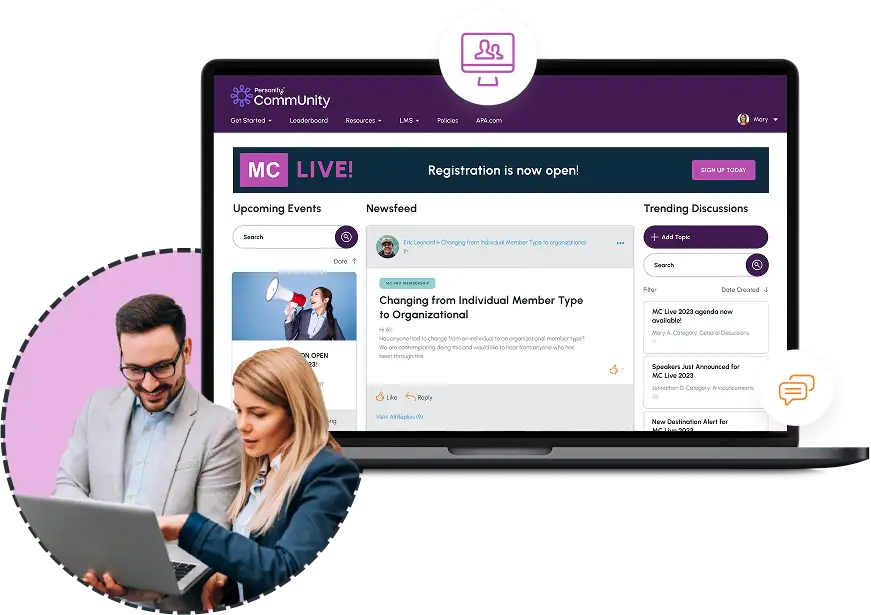
Looking for an AMS that enhances community engagement?
How to Evaluate AMS Vendors and Choose the Right Partner
Selecting the right AMS vendor is just as important as choosing the right software. A great system won’t be effective without reliable support, seamless implementation and a vendor that understands your association’s unique needs. Evaluating AMS vendors based on key criteria ensures that you partner with a provider that not only offers the right functionality but also delivers long-term value, scalability and strong customer support.
Assessing Vendor Capabilities:
Key Factors to Consider When Assessing AMS Vendors:
- Industry Experience and Reputation – Look for vendors with a strong track record in the association management space. References, case studies and client testimonials help show how their AMS solutions have helped similar organizations.
- Scalability and Future-Proofing – Your AMS should be able to grow with your association. Assess whether the vendor offers regular updates, new features and scalable pricing plans to accommodate future needs.
- Customization and Flexibility – No two associations are the same. Evaluate whether the AMS allows for customization, including workflow automation, branding options and tailored reporting tools to fit your unique operations.
- Integration Capabilities – Ensure the vendor supports seamless integrations with your existing tools, such as accounting software, CRM systems, learning management platforms and email marketing tools. Look for open API access for additional flexibility.
- Data Security and Compliance – Security should be a top priority. Confirm that the vendor follows industry best practices for data protection, compliance with GDPR, CCPA and secure payment processing to safeguard member information.
- User Experience and Ease of Use – A powerful AMS is only valuable if your team and members can easily navigate it. Request demos and trials to assess the system’s usability, dashboard intuitiveness and learning curve.
- Customer Support and Service Levels – Vendor support can make or break your AMS experience. Review service level agreements (SLAs), response times and the availability of support options, including phone, chat, email, knowledge base and service resources.
- Training and Onboarding Programs – An effective AMS rollout depends on proper training. Check whether the vendor offers live training sessions, video tutorials, help documentation or dedicated onboarding specialists.
- Pricing Transparency and Total Cost of Ownership – Understand the full cost of implementation, including licensing fees, customization costs, integration expenses and ongoing support fees. Be sure to compare long-term value rather than just upfront costs.
- Innovation and Product Roadmap – Choose a vendor committed to continuous improvement. Ask about upcoming feature releases, product updates and how they incorporate customer feedback into system enhancements.
Finalizing Your AMS Selection: Next Steps for a Successful Implementation
Finalizing Your Needs Checklist:
Before moving forward with vendor selection, take the time to finalize and refine your needs analysis checklist. This document will serve as your guide throughout the evaluation process, helping you stay focused on what truly matters for your association. Ensure that your checklist clearly outlines must-have features, desired integrations, support requirements and long-term scalability considerations.
Reviewing your checklist with key stakeholders ensures alignment and prioritization of essential functionalities. By having a well-defined set of requirements, your association can confidently compare AMS solutions and make a selection that best supports your operational and strategic goals.

Moving Forward with Vendor Selection:
With your needs checklist finalized, the next step is to begin the vendor selection process. Start by researching potential AMS providers and preparing a Request for Proposal (RFP) that outlines your association’s requirements, priorities and expectations. An RFP helps vendors tailor their responses to your specific needs, making it easier to compare solutions.
Once you receive proposals, carefully evaluate each vendor based on functionality, integration capabilities, support services and long-term scalability. Schedule product demos to see the AMS in action, ask critical questions about implementation and ongoing costs and involve key stakeholders in the decision-making process. Taking a structured approach ensures that you select an AMS that aligns with your association’s goals and provides long-term value.

Ready to Take the Next Step?
Once you’ve nailed down your must-have features and integrations, see what implementation with MemberClicks looks like from start to finish. Check out our Implementation Overview to understand key milestones, timelines and the support you’ll receive when bringing your new AMS to life.

Discover the difference a true software partner can make
Book a call with our team today and discover how MemberClicks can help you achieve your goals and build meaningful relationships with your members.
Schedule a call







 Need Help?